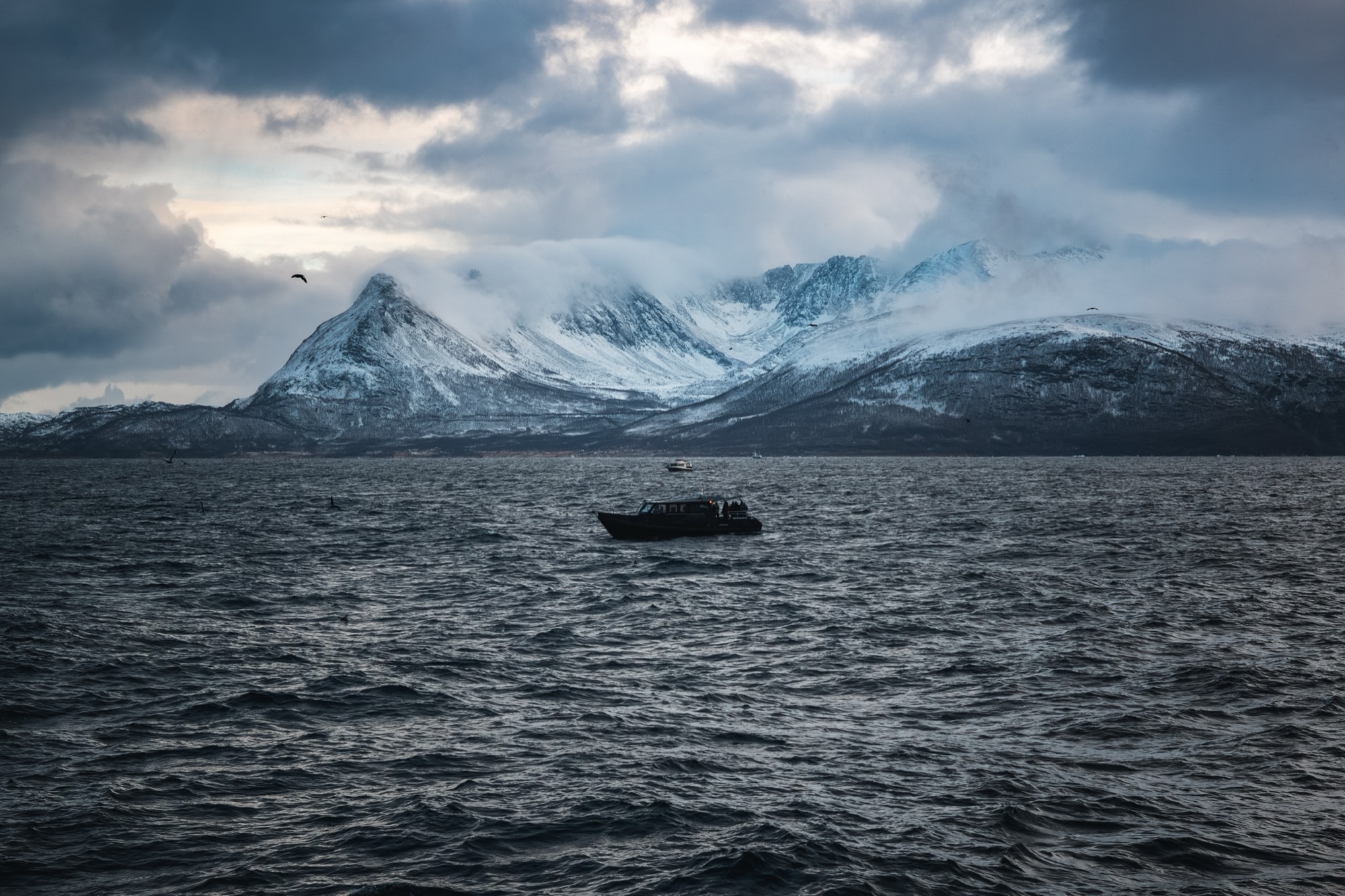
A research team can cover a stretch of coastline. It cannot cover an ocean. Whales, inconveniently, do not stay on the stretch of coastline. For decades this was simply the limit of what could be known — until someone noticed that thousands of people were already out on the water every day, looking at exactly the right things, for entirely different reasons.
Introduction
Citizen science is the participation of the public in scientific research. Citizen science contributes, for instance, to data monitoring and collection programs. The work is usually done on a voluntary basis and can start with sharing your whale photos from your holiday. Volunteers can range from children to experienced whale watchers. Due to limited resources, it is often impossible to monitor large areas for a single science team. Such teams must then focus on specific areas of interest and limit their scope. The participation of the public can widen this scope significantly. Fishers, locals, and tourists can all provide useful information and thereby cover a much larger area.
In Brazil, valuable data about the occurrence of cetaceans in coastal waters in southeastern Brazil was gathered by a Facebook group of volunteers. The group called “Where are the Whales and Dolphins” recorded 315 sightings of eight different species between 2015 and 2019. These results were important in covering areas that were not monitored by researchers. Especially with highly mobile species, such as whales, citizen science can be a very valuable tool in research and conservation efforts.
Citizen science and right whales
Right whales are still recovering from the many years of exploitation and are currently fighting impacts from climate change and habitat degradation. A study by Petra Nevečeřalová applied genetic methods to explore population structure and assess the current status of right whales in the southern African breeding ground. It was important to disturb the whales as little as possible and to adhere to ethical standards. Therefore, the study used sloughed skin, which can be collected at the surface, particularly after active behaviors such as breaching. The majority of samples collected were from commercial whale-watching trips. Citizen scientists aboard these boats would spot the pieces of skin and pick them up with a dip net. Then they would transfer the skin with sterile tweezers to a tube containing ethanol. Using a non-invasive technique for collecting skin has the added benefit of requiring little training or equipment, and fewer permits than biopsy sampling. This offers the opportunity to employ citizen scientists, which means multiple boats collecting data on any given day during the season.
Citizen science can help mitigate threats
Ship strikes are a real threat to cetaceans worldwide. A study by Nisi and others found that global shipping overlaps with most of the ranges of the large whales they studied, and that only a small fraction of the high-risk areas have any protection measures. Mitigating the risk of ship strikes is a monumental task and requires monitoring of large areas. Scientists cannot monitor areas that large effectively and in an economically sustainable way. By engaging people in citizen science, these large areas can now be monitored by citizens already out on the water, for example, ecotourism operators. One way to mitigate the risk of ship strikes is real-time observations of cetaceans. The Ocean Wise Sightings Network (OWSN) curates sightings data collected by volunteer observers into a database that makes it possible to monitor cetaceans in British Columbia and Washington State waters. The WhaleReport Alert System (WRAS) is OWSN’s mitigation tool, which uses real-time sightings and hydrophones to detect cetaceans. They then use the information collected to warn professional mariners of nearby cetaceans. This allows them time to slow down or divert course to avoid the cetaceans.
Acoustics and AI
Cetaceans are very vocal and use sound for a wide variety of activities. For that reason, continuous underwater Passive Acoustic Monitoring (PAM) has become an important tool in the study of cetaceans. Everything from ecology to migration routes and population dynamics has been elucidated by acoustic monitoring. The issue is that it produces enormous amounts of data. To efficiently use the acoustic data gathered, automated processes need to be used. AI is a big part of the solution to this problem, but that requires large amounts of labeled data first. These labels are reliant on human experts to manually go through the data. This is another area where citizen science can help. Using citizen scientists to help go through and label the data would drastically increase the amount of data being labeled. One group of 19 novices and one expert focused on blue whale calls in the Indian Ocean to find out whether untrained ears could be useful. The study found that with a sufficiently high number of novice annotators, they could train the models to reach the same performance as the ones trained by experts. A single novice makes mistakes, but when you combine their assessments, they become very accurate. A phenomenon called wisdom of the crowd.
It therefore seems to be a legitimate alternative or supplement to expert annotation.
Here we will take a look at how to get started in citizen science and some of the organizations involved in it.
Happywhale
Happywhale aims to support healthy oceans through conservation science and education. The hope is that these efforts will increase global awareness and care for marine environments and marine animals. You can help today by submitting your whale photos. All you have to do is review their tutorial on how to take optimal photos before going whale watching, and then submit your photos. The photos will be used for identification and thereby provide important sighting data. A study on the North Pacific humpback decline by Cheeseman, which we have previously encountered in this course, was built largely on photos submitted to Happywhale.
ORCA OceanWatchers
ORCA OceanWatchers is a programme that makes it possible for everyone to contribute to conservation work through data collection. All you have to do is take an online training course, and you are ready to contribute. You can collect data from anywhere with a view of the sea, whether that is from your own boat or the beach is up to you.
Whalereport
WhaleReport is a free app from Ocean Wise, and it's where the whole system begins. If you see a whale, dolphin or porpoise, you open the app and log what you saw, where and when (a photo helps, but is not required). Your report goes into the Ocean Wise Sightings Network database (as discussed earlier in the lesson), where it becomes part of the long-term record of which animals use these waters. Reports that meet certain criteria do something more immediate: they trigger an alert through the WhaleReport Alert System to ships in the area, which can then slow down or change course. It takes less than a minute, and it may be the rare case where a holiday photo changes the path of a container ship. The app covers the waters of British Columbia and Washington State, so it is one for the west coast of North America — but it is worth knowing about as a model, because similar systems should be coming elsewhere in the future.