The name “right whale” came from whalers, who deemed it the “right” whale to hunt due to its characteristics of slow swimming, nearshore occurrence and its rich stores of oil and baleen. We are about to see it is so much more than this.
Recording: NOAA. NOAA Fisheries, NEFSC, Passive Acoustics Branch. 2023. North Atlantic Right Whale 1. NOAA Sounds of the Ocean
Overview
Let’s imagine we were born a right whale. You would become one of three species - North Atlantic right whale, North Pacific right whale or southern right whale. The species we would become would make a huge difference. Not in terms of what we look like or what we eat, but in our chances of survival. The North Atlantic and North Pacific right whales are listed as critically endangered and endangered by the IUCN. The southern species is doing better, with population growth of up to 7-8% a year, but showing signs of slowing down with longer gaps between births. The eastern North Pacific population is perhaps the most endangered group of large whales, with only about 30 left.
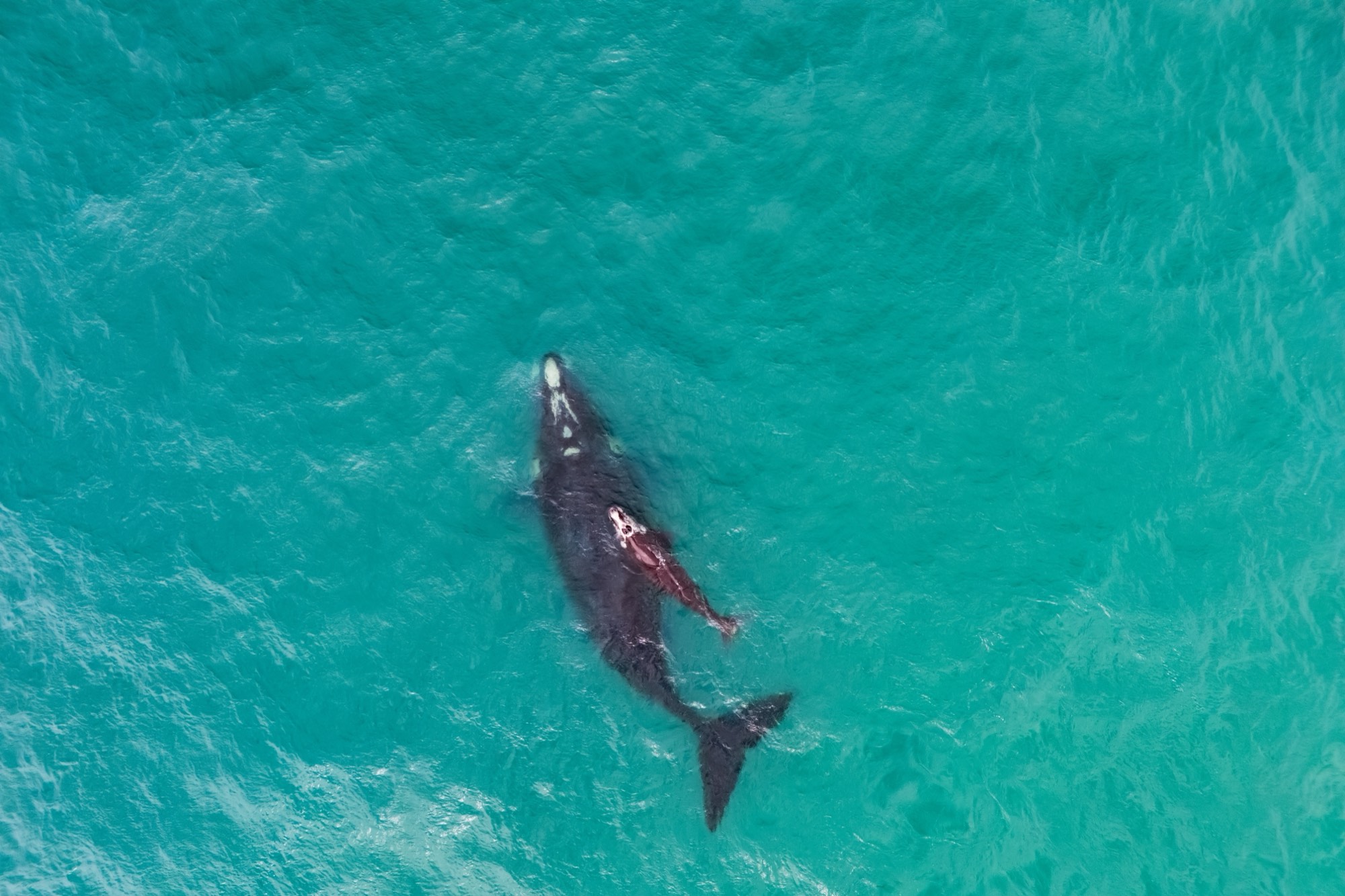
Gestation lasts about one year, followed by birth in winter on one of the calving grounds. The calving ground will likely be in shallow coastal regions or bays.
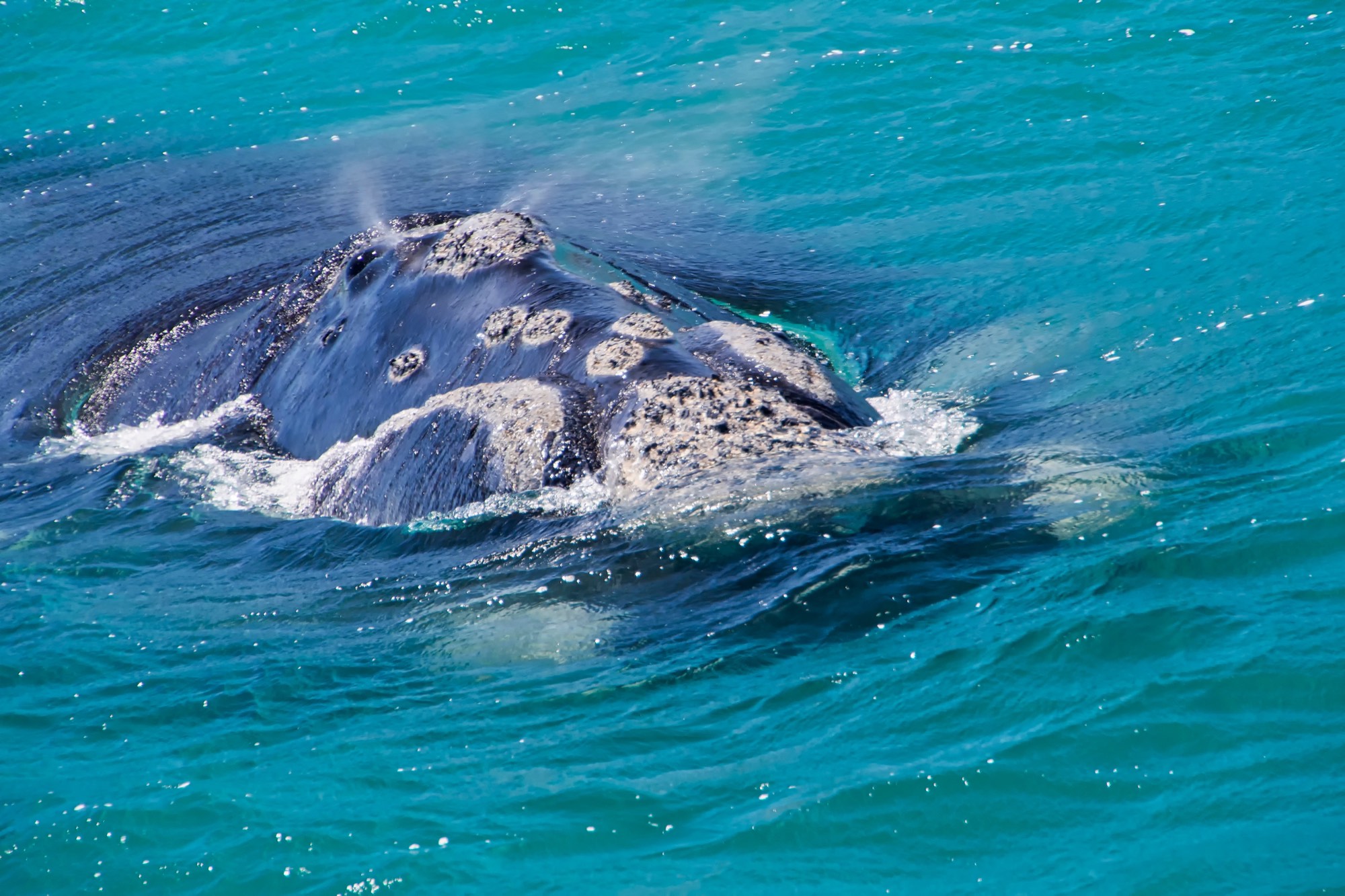
Our congenital callosities would keep developing for the first few months. Callosities are thickened keratinized tissue. Callosities are inhabited by “whale lice,” and their function is still not known. The patterns of callosities are unique and important when photo-identifying whales. The first year after birth is packed with growth before you are weaned after a year. You would double in size in the first year alone. You would continue building on your compact physique, which can reach girths up to more than 60% of body length. Right whales migrate between high latitude feeding areas and low latitude breeding and calving areas. On your first migration with your mother, you would learn the feeding grounds and return to the same ones for the rest of your life. As a female, you would likely have your first calf at the earliest about 9-10 years of age. The age of maturity for males is unknown. Your expected lifespan would again vary greatly depending on which species you belong to. The North Atlantic right whale has a median lifespan of 22.3 years, likely shortened by human impacts. The southern right whales can expect about 73 years, perhaps even 130!
Feeding
Right whales migrate to feeding grounds where they spend large parts of spring, summer and fall. They only eat zooplankton - especially small crustaceans about the size of a rice grain. Their favorite zooplankton likely varies among the three species; krill seems to be more popular among the southern right whales. Right whales are like the blue whale and humpback whale filter feeders. Unlike those, right whales specialize in a filter-feeding style called “continuous ram feeding” or “skimming". This technique consists of swimming slowly (around 1 m/s) with mouths open while skimming prey from the water. Often for several minutes at a time, they combat the high drag with their powerful flukes.
Right whale heads are built for this particular type of feeding. They have an arched rostrum that allows for long (2- 2.8 m) and fine-textured baleen. The large baleen surface allows for large catches of prey. When swimming, the water and prey enter through a gap in the two baleen racks. Water then exits through the baleen racks on the sides of the mouth. This shape of baleen also reduces the pressure wave in front of the whale, thereby maximizing the amount of prey entering. This is usually done at the surface, but can also happen at depth. A study by Susan E. Parks and others found that in Cape Cod Bay, the whales primarily fed just below the surface. This fits with a survey showing their prey resided in the upper 5 m of the water during spring. The risk of ship strikes is thus particularly high in spring.
Courtship
Right whales differ from most mammals in that they don’t display any violent competition for females during courtship. Right whales often form groups of up to 20, with one female the center of attention. These large aggregations are called “surface-active groups”. Surface-active groups are present year-round, but calving is strictly during winter. This is a clue that these groups form for social reasons and not exclusively for fertilization. One suggestion is that they happen in order for the female to assess the quality of the males. But if potentially 19 males are present and all competing for access to the female, how do they determine who wins? One theory suggests that right whales compete through their sperm. The competition then depends on who produces and displaces the most sperm. This would explain their enormous testes, perhaps the largest of any animal, which are 2m long and weigh 500 kg each. It seems unlikely that they would spend so much energy on testes adaptation if they did not feature heavily in reproductive success. One researcher also observed a female copulating with two males at the same time, also an indication of sperm competition being a factor. Other factors likely matter too. Vocalization likely plays a part in attracting females and projecting dominance onto other males.
Right whale vocalizations are mostly low-frequency moans and pulses. However, during surface-active groups, male right whales also produce gunshot sounds. These sounds are loud (185dB), short (0,02 s), and have frequencies between 20 Hz to 20kHz. In the North Atlantic right whale, these sounds are almost exclusively found on the feeding grounds. An indicator that it likely functions as a reproductive advertisement display.
Threats
Right whales are among the most endangered of the large cetaceans. They face threats from all sides, and currently 2 of 3 species are facing possible extinction. Heavy whaling from all the way back to the 11th century by the Basques has put a strain on these species. North America began hunting them by the 17th century, and right whales in the western North Atlantic were nearly extinct by the middle of the 18th century. Whalers then moved on to sperm whales and only taking right whales opportunistically. Right whales were protected in 1937, but were still killed by Japan and the Soviet Union for several more years.
This extreme whaling has probably diminished the genetic diversity of the survivors.
Threats remaining today are ship strikes, fishing gear entanglement, climate change, habitat loss and pollution. Ship strikes are of particular concern for the North Atlantic right whales. 1-2 (that are known) are killed each year and probably many more are injured. Regulations of ship speed near coastal waters seem to have helped, however.
Fishing gear entanglement is another serious issue facing especially the western North Atlantic right whales. Annual mortalities have been 2-4 whales, but are increasing in frequency. The number of injuries is much higher. 85% of right whales in this area carry scars from fishing gear. Many of them have likely been caught in fishing gear several times.
Right whales are also among the most susceptible to climate change. Right whales are specialist feeders and require dense aggregations of prey, which form with particular ocean characteristics. These places are their feeding grounds, and they may be changing due to climate change. Known feeding grounds may be hard to deviate from, because of the whales’ reliance on the locations shown to them by their mothers.
Back in 2017 in the Gulf of St. Lawrence, 12 North Atlantic right whales died from fishing gear entanglement and ship strikes. As a strong reaction to this, Canada implemented multiple measures to prevent this from happening again. Canada started by closing fisheries and implementing speed reductions for ships. Following this were consultations with fishermen, Indigenous peoples, provincial governments, NOAA and scientists. The measures agreed upon were: rope reduction, fisheries closures and speed reductions. Added to this was real-time monitoring of the whales. This allowed for planning of how to best manage shipping corridors and fishing areas. In 2018, no right whales died in this area. The measures met criticism, however, and ultimately were scaled back. In 2019, 9 deaths were recorded. Currently, a lot is being done for the right whales of this area. Vessel traffic management zones, mandatory protection zones, voluntary protection zones and monitoring are all happening right now.
This example illustrates that much can be done to save right whales and people care. There is hope for the North Atlantic right whales.