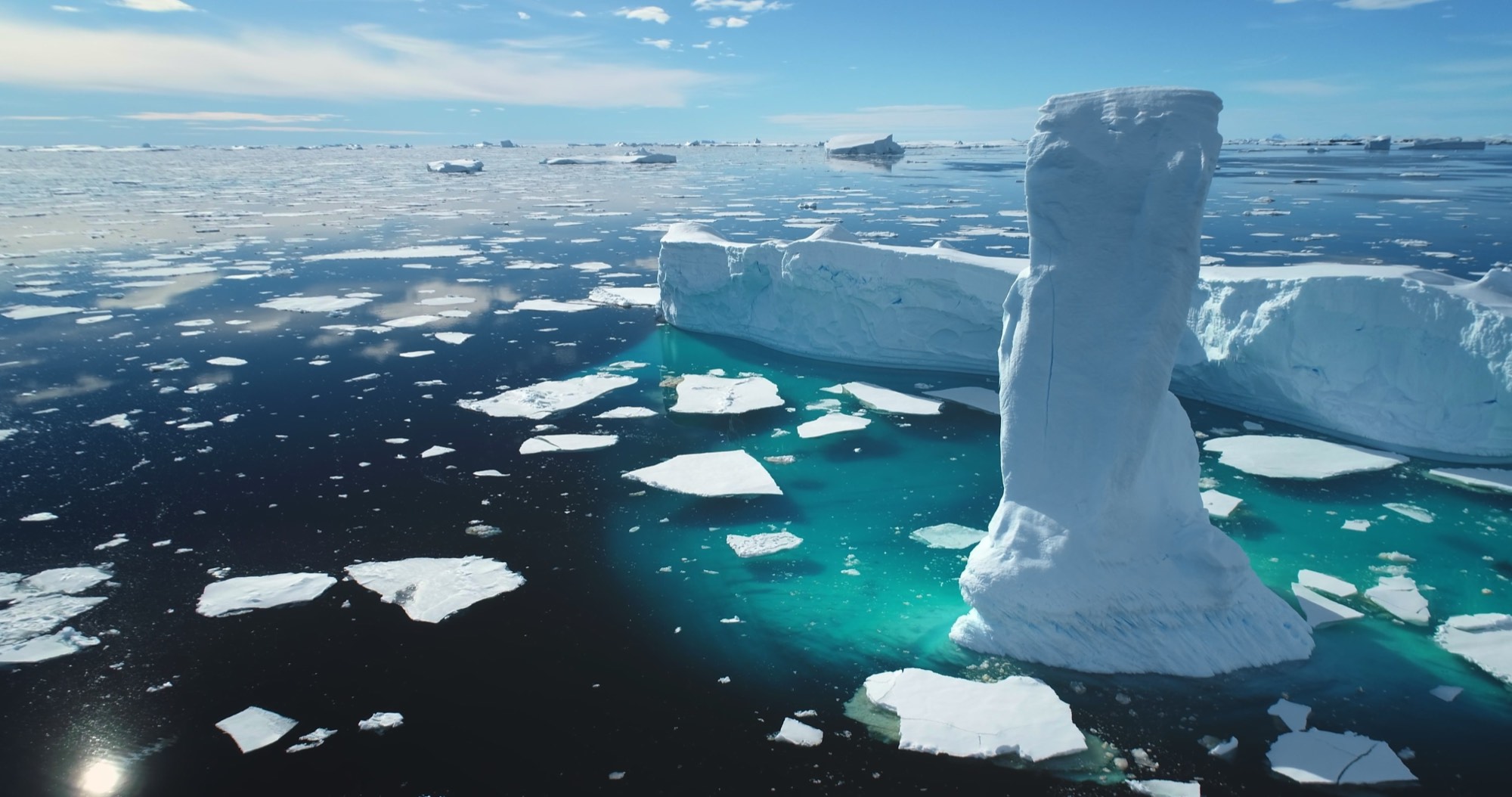
More than 90% of the heat we have added to the planet has been absorbed not by the air, but by the ocean. Whales live inside that changing world — and for some, it is warming so fast that the ice, the food and the silence they depend on are all vanishing at once.
Introduction
Climate change is endangering lives through the alteration of Earth’s systems. Our oceans cover about 70% of the surface of our planet and are crucial to the overall health of Earth. The oceans impact weather on a global scale, which has direct consequences for both humans and wildlife. The human-made disturbances affect marine life heavily, as shown by the Living Planet Index. WWF's Living Blue Planet Report (2015) tracked 5,829 populations of 1,234 marine species and found that marine vertebrate populations declined by 49% between 1970 and 2012 — with some heavily fished families, such as tunas and mackerels, falling by almost 75%. Freshwater species have fared even worse, declining by around 81% over a comparable period. These losses show how much pressure ocean life was already under before the added strain of a warming climate. The oceans have taken most of the hit from climate change by absorbing more than 90% of excess heat trapped by greenhouse gases and approximately 25% of CO2 emissions (by 2100, the oceans will be warmed by 3-5 degrees according to some estimates). This causes the oceans to warm, acidify and deoxygenate. These effects amplify the pressure we are already putting on the oceans through overfishing, habitat destruction and pollution. For example, coral reefs are the home of more than 25% of all marine species while only covering less than 0.1% of the ocean. They provide biologically rich and productive ecosystems to the oceans. Acidification reduces the ability of coral reefs to re-establish themselves after disturbances such as bleaching and cyclones. At current rates, the ocean will lose most of its coral reefs by 2050, which would cause massive changes to the species that call coral reefs home.
How climate change impacts whales
| IMPACT | WHAT HAPPENS |
|---|---|
| Krill disappearance | In Antarctica, krill is the number one food source for baleen whales. The krill depend on the algae that grows on the underside of the sea ice, so when the ice melts or arrives later, this strongly affects the algae — and therefore the krill abundance. Without krill, the whales will starve. |
| Acidification | The oceans take up much of the emitted CO₂, which acidifies them. The acidity makes it much harder for shelled organisms to build their calcified shells. These small species sit at the bottom of the food chain, and their troubles spread upward — ultimately affecting the whales. |
| New dangers in the Arctic | Arctic whales like the beluga, narwhal and bowhead have specialised for life in the ice-covered Arctic, using the ice for protection. With receding ice, however, killer whales can move further north and hunt these Arctic whales — who are unaccustomed to this new threat. |
| Noise pollution | Receding Arctic ice opens new global shipping lanes, along with new resources ready for exploitation. This will massively change the sound environment for whales in these areas, complicating communication, navigation and — for some — foraging. |
| Migration timing | Some whales migrate incredible distances in search of food, with skills that let them time it perfectly — arriving exactly when the food appears. Climate change drives plankton and prey to appear earlier, which means the whales may arrive too late. |
The Arctic
Climate change is very visible in the Arctic. The total area of ice coverage is declining very quickly, with particularly the older multi-year ice being replaced by seasonal first-year ice. The Arctic has warmed almost four times faster than the global average since 1979.
This is due to a set of processes known together as Arctic amplification. Arctic amplification explains why global warming does not distribute itself evenly across the globe and works through complex feedback loops (more on that in the dig deeper).
According to forecasts, the Arctic Ocean may experience seasonally ice-free conditions as early as the mid-2030s (ice-free in climate science means less than 1 million square km of sea ice in September). This extreme warming has a huge impact on the Arctic marine mammals that have adapted to icy conditions. The sea ice is used for hunting, breeding, resting and migrating. Species such as narwhals, bowhead whales and beluga whales all have adaptations for survival in this habitat. For example, thick blubber to keep them warm and acoustic communication created in the icy environment. With long lifespans, late maturity and few offspring, whales are not made to adapt quickly to such massive changes.
Synergistic interactions
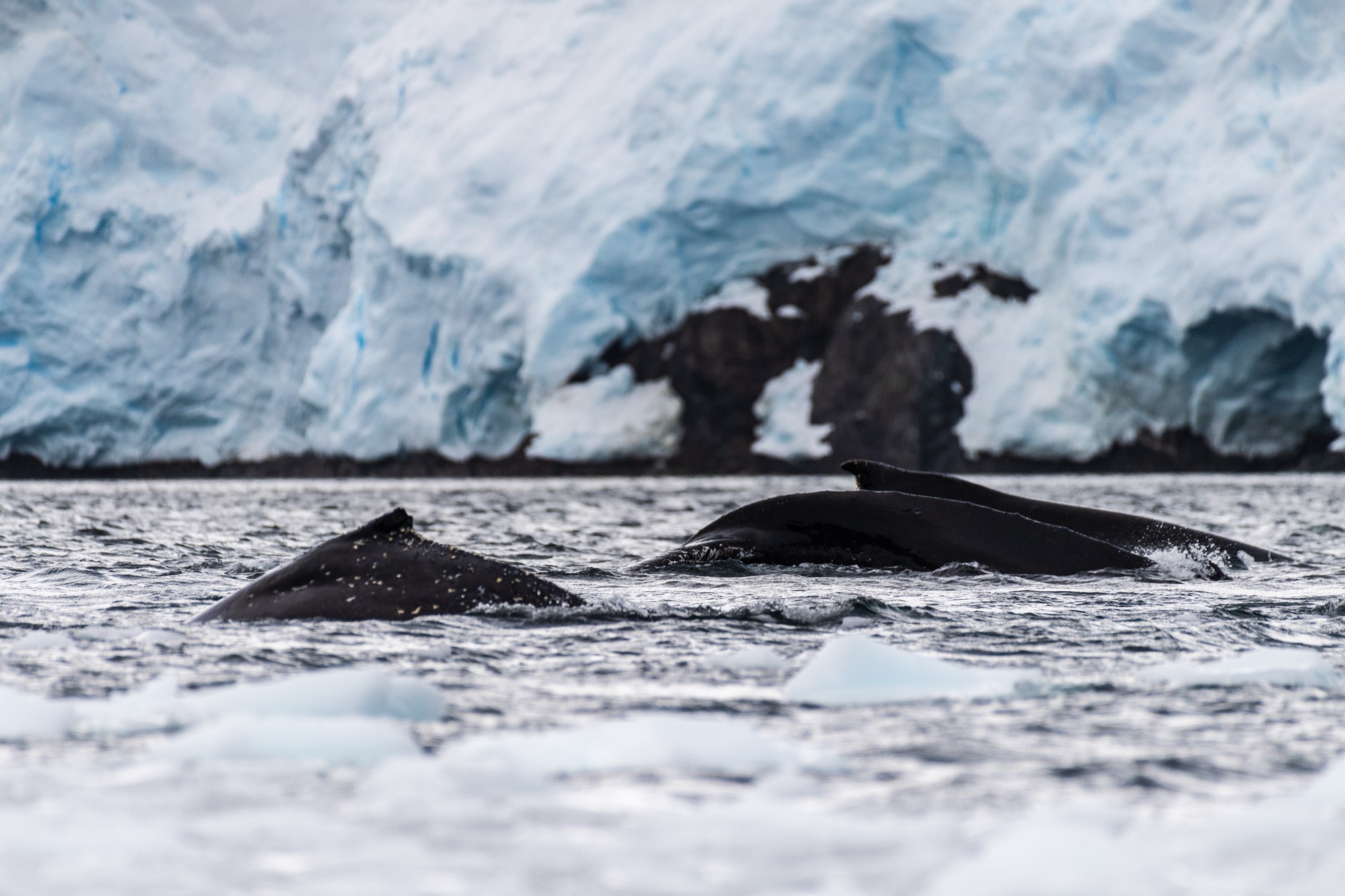
Marine mammals are experiencing habitat loss, effects from ocean warming, ocean acidification, industrial development, accumulation of contaminants and changes in prey availability. Much research exists on these individual challenges as well as other man-made disturbances. It is, however, also important to consider their potential synergistic interactions. The cumulative effects of these stressors may together present an even larger challenge than the individual stressors. These potential synergistic interactions are hard to assess and often work in unpredictable ways, making conservation much harder.
Narwhals are a highly specialized species that depend on rather specific conditions in temperature, food and habitat. They live in deep glacial fjords and ice-edge habitats where moving around is not always easy. Narwhals hunt underneath dense ice sheets with very limited visibility, so they rely on echolocation for foraging. They can make long dives and search for mostly fish and squid. Melting sea ice opens narwhal habitats to ships and seismic surveys, filling a once quiet environment with noise. Acoustic tags have shown that narwhals halved their foraging buzzes when a noisy ship was 12 km away, and stopped foraging entirely at 7–8 km. Effects could be detected more than 40 km away. This makes it much more difficult for narwhals to find food and takes a larger toll energetically. That is an example of a synergistic interaction between habitat compression and man-made noise pollution leading to stress and diminished resilience for narwhals.
Right whales under threat
The North Atlantic right whale is one of the most threatened cetaceans. The conservation of these whales has been built on the knowledge of their routine of feeding in the western part of the Gulf of Maine during winter/spring and in the eastern part during summer/fall. These movements are made to follow their prey, the copepod Calanus finmarchicus. The right whales shifted this pattern between 2008 and 2010, with health deterioration following. Their recovery has stalled, and perhaps the situation is even worse. In 2017, at least 17 whales died in a population of 450 whales. In 2018, no calves were born. This, taken together, raised serious concerns that the population might go extinct within 30 years. A study by Nicholas R. Record points to climate change-driven changes in the North Atlantic Ocean circulation leading to changes in deepwater dynamics, which means that the deeper water warms at a rate twice that of the surface water. This warming has led to reduced prey and a northward shift in the distribution of the prey. The right whales follow the prey northward into areas lacking the protection of their usual feeding areas. The conservation measures in place to protect the right whales were, for instance, speed limitations and fishing equipment restrictions.
This shift has meant that drastically more right whales died and were severely injured by ship strikes and entanglement. The lack of food and physiological stress have also resulted in very low birth rates.
The Arctic warms at a much quicker pace than the rest of the globe. That is largely due to three reasons: 1. Sea ice-albedo feedback, 2. Lapse-rate feedback, 3. Changes in heat transport. We will go over them separately here.
- Sea ice-albedo feedback is a mechanism based on the albedo of snow and ice. Albedo is the capability of a surface to reflect sunlight. Snow and sea ice have a very high albedo, meaning that they are very good at reflecting and therefore do not absorb the heat as much. Dark seawater, however, has a very low albedo, which creates a feedback loop: warmer air —> melting of sea ice —> dark seawater uncovered —> more heat absorbed by the ocean.
- Lapse-rate feedback is about where in the atmosphere the heat gathers. Every day the sun warms the Earth, but Earth must release this heat to avoid overheating. This release back into space occurs 5-8 km above the surface. In the tropics, the higher layers warm more quickly than the surface, so heat release is more effective and warming is dampened. The reverse is true in the Arctic. The cold and very stable air with the warmer ice-free ocean means that the heating stays at the surface. The higher altitude layers thus only warm a little, meaning that heat escapes poorly, further warming the Arctic.
- Ocean currents lead warmer Atlantic and Pacific water into the Arctic Ocean. This warmer water heats the sea ice from below, which makes it more susceptible to melting.