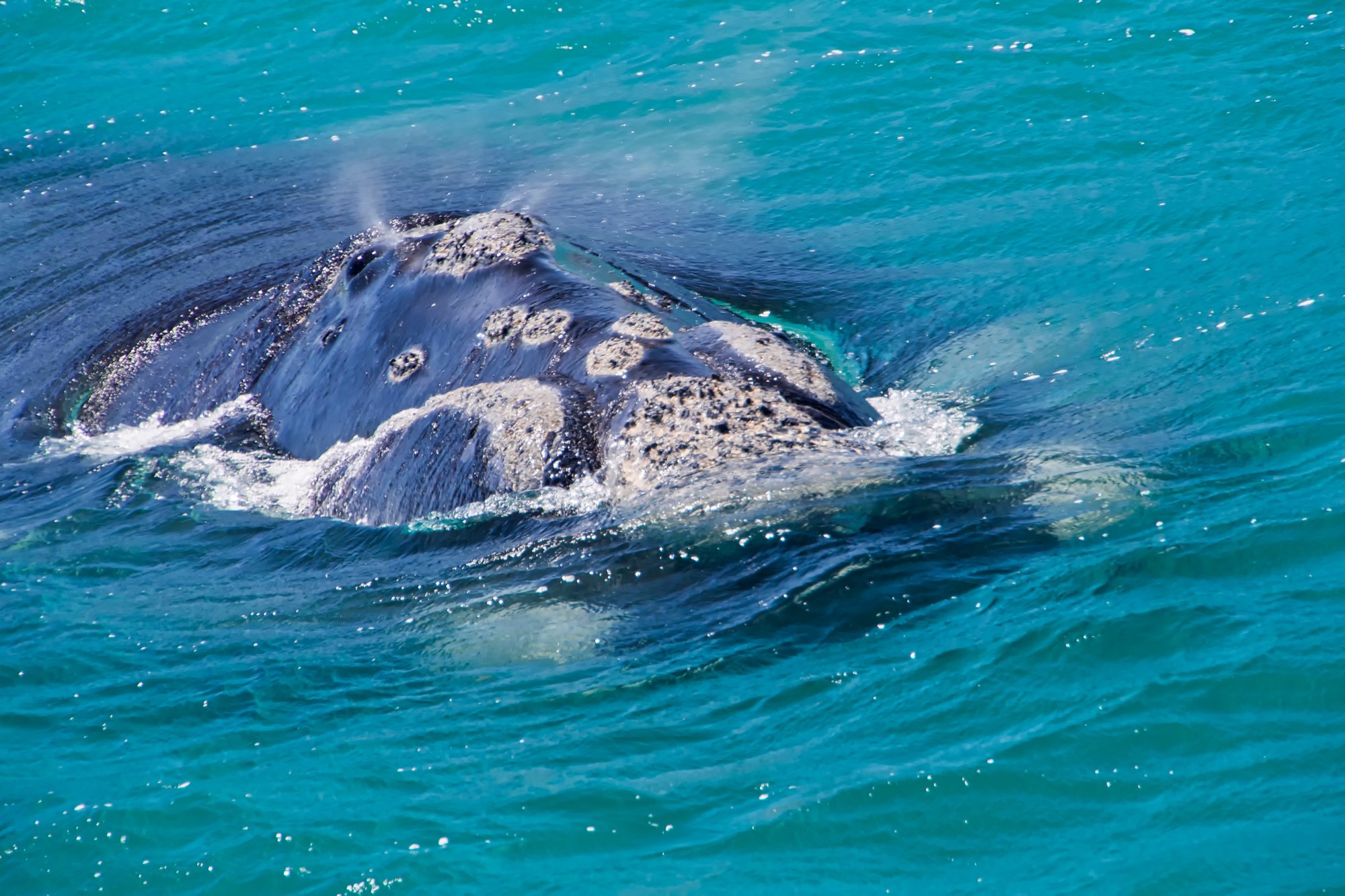
For a whale, the ocean is a world of sound, not sight. So what happens when we fill that world with noise it was never built to hear?
Overview
Cetaceans rely on sound in a way that is hard for us to fully comprehend. A large number of their important activities are carried by sound. It includes navigation, finding mates, foraging, avoiding predators and finding their way in an environment without many other reliable cues. While other senses do have a role to play, the marine environment favors the acoustic channel.
The oceans are full of noise, both natural and human-made. Most of this noise is simply ambient background noise without much effect on the whales. Over evolutionary time, whales have grown used to the natural noise of the ocean, like wave noise and rainfall. The recent large increase in noise caused by humans has happened so quickly that marine life can't have adapted to it. Long-lived species like whales cannot adapt at the same pace as the changing habitat.
The effects of noise pollution can have different faces. Naval sonar and seismic surveys can be lethal to cetaceans. Whales have been observed dying (by stranding or death at sea) within hours as a result of even brief exposure to mid-frequency military sonar.
It can also be less urgent, but just as important, by changing the behavior of whales. Whales have changed feeding and breeding grounds, changed migration routes, changed calls, or gone quiet. They have likely been hit by ships because of hearing damage, so they could not detect the ships. Increased stress and reduced foraging efficiency have also been shown. Noise is thought to be an important contributor to several cetacean species’ declines.
Migration
Many baleen whales undergo huge yearly migrations, often learning the route from their mothers. This is very energy-intensive, and the benefits of breeding and feeding grounds must outweigh the costs. Navigation is therefore very important, and it seems that the ability to hear, respond to and produce sounds is a crucial factor in successful navigation. The hearing of external sounds, like waves crashing against a coast, can provide important cues. The emission of low-frequency sounds can reveal information about environmental features, such as seamounts. And migrating whales seem to be in contact with each other and cooperating. Through modelling, this collective navigation has been shown to increase navigation efficiency by averaging out navigational mistakes across the group. This teamwork requires a relatively large group and the very loud, low-frequency sounds of baleen whales that can travel up to thousands of kilometers. Complicating this technique is the rising ambient noise of the ocean due to humans. Sounds from, for example, shipping, sonar and offshore construction have, according to estimates, increased the noise by more than 20 dB in some regions.
A model developed by Stuart T. Johnston and Kevin J. Painter explored the impact of ocean noise in the context of migration. Ambient noise is thought to 1) reduce whale communication space, 2) generate avoidance responses when loud and 3) lower navigation information. They can all lengthen the duration of the migration, and some scenarios might result in failed migration. The model predicted that the reduced communication led to greater solitude and slower migration as the benefit of collective navigation eroded. The loud noises can lead to avoidance responses, which block certain routes and could cause the migration to fail. The decrease in navigation information would result in increased confusion, which might lead to off-course drifting and thereby cost important energy and time.
Whales likely possess certain skills not accounted for in the model, leading to better results than predicted, but it does paint a picture of the threats to whale migration by noise pollution.
Stress
Baleen whales use low-frequency sounds for communication. These sounds can be heard from hundreds of kilometers away or perhaps even thousands, possibly allowing contact over very large distances. The noise from large ships is also low-frequency (20-200 Hz) and thus overlaps with the communication of the whales. Since the 1960s, the low-frequency ambient noise has increased by 10-12 dB in the Northeast Pacific largely as a result of the doubling of the global shipping fleet.
In response to this, whales have been reported to shift habitat, change vocalization patterns, change the length of signals and wait to communicate until the noise is reduced. But stress levels also seem to be elevated in response to increased ocean noise.
The tragic events of 9/11 resulted in an experiment on the effects of noise on North Atlantic right whales. The right whales gather yearly in the Bay of Fundy, Canada, to nurse their offspring. Shortly after 9/11, ship traffic was decreased in this area, and acoustic recordings showed that the low-frequency ambient noise levels were also markedly decreased. During 2001 and for the following four years, a study on stress-related faecal hormone metabolites was active.
A study by Rosalind M. Rolland showed a reduction in faecal glucocorticoids (fGC) with the decreased noise levels (6dB). Glucocorticoids (GCs) are released during social aggression, encounters with predators, starvation and human disturbances. Concentration of fGCs is a good way to gauge physiological stress levels, and this study therefore shows that stress levels of the whales decreased with less noise.
The release of GCs is beneficial short-term, but when it becomes a chronic state, it is very problematic. It suppresses growth, the immune system and reproduction.
The recovery of the critically endangered North Atlantic right whale is already under severe pressure from ship strikes and entanglements, and the chronic stress only adds to this. It is not as obvious an issue as the former two, but its consequences might be just as serious.
I can’t hear you!
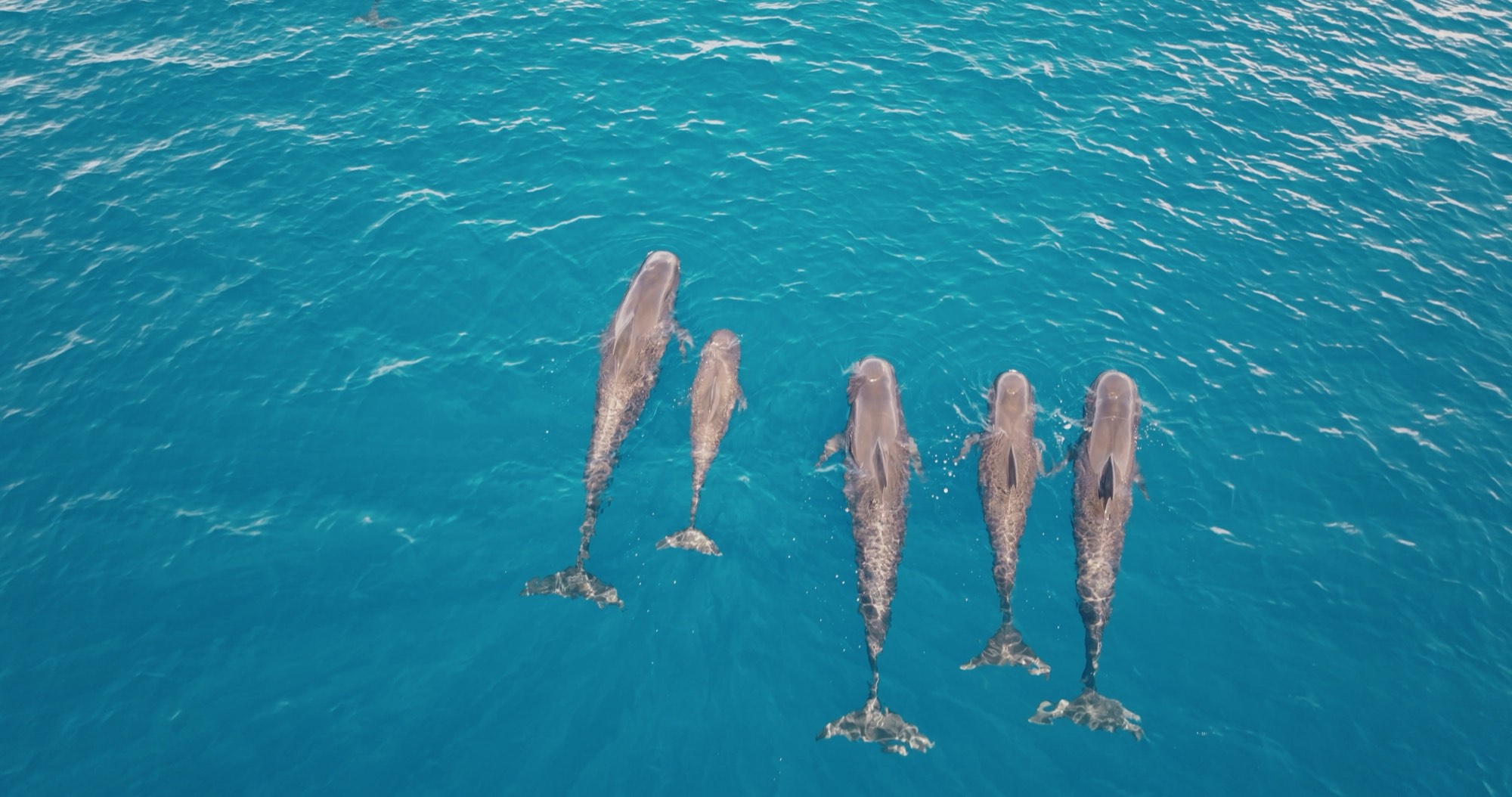
A population of long-finned pilot whales calls the Strait of Gibraltar home. More than 60,000 ships pass through each year, making it one of the most active waterways in the world. The pilot whale population must navigate the traffic while searching for food, finding mates and raising their calves. The ships also bring with them a lot of noise, which makes it much harder for the whales to communicate. Milou Hegeman and Frants Jensen led a study with the purpose of investigating how the whales counter this noise. They attached recorders to 23 pilot whales with suction cups. The recorders caught 1432 calls, which the team divided into four categories: low-frequency calls, short pulsed calls, high-frequency calls and two-component calls. Nobody knows what the calls actually mean to the whales, but the low-frequency and two-component calls could be heard from furthest away and are thought to make possible the finding and reuniting of other pod members. The ambient noise from the ships was loud, with it ranging from 79-144 dB, which is enough to mask much of the whales’ communication. The response is to make their calls louder. The high-frequency and short-pulsed calls can be made louder so they can be heard over the noise. The low-frequency and two-component calls, however, are basically already being shouted. This makes it much more difficult to find each other after dives. The entire population of roughly 250 pilot whales is critically endangered and will likely have a hard time finding mates from other pods in the noise.
Noise from shipping traffic is recognized as a chronic, habitat-level stressor. The noise from these ships complicates communication and foraging for whales. Southern resident killer whales (SRKWs) use Haro Strait in Washington State as a summer feeding habitat. This area is among the loudest along the Pacific coast. This population is also one of the most endangered in the USA.
Limiting noise disturbance has been identified as one of the critical factors in their recovery. Much evidence points to a status quo that is untenable if they are to recover. We don’t yet know why noise affects their foraging, but one study showed that SRKWs spend about 25% less time foraging when around boats. The levels of ship noise are likely only going to increase, so methods to reduce the noise of ships are paramount.
Some methods are 1) reducing the speed of ships, 2) removing the loudest ships, 3) retrofitting vessels, 4) replacing loud ships with new and quieter ships, 5) relocating shipping lanes, 6) the convoy approach.
The survival of the SRKWs might depend on our ability to implement at least some of these.