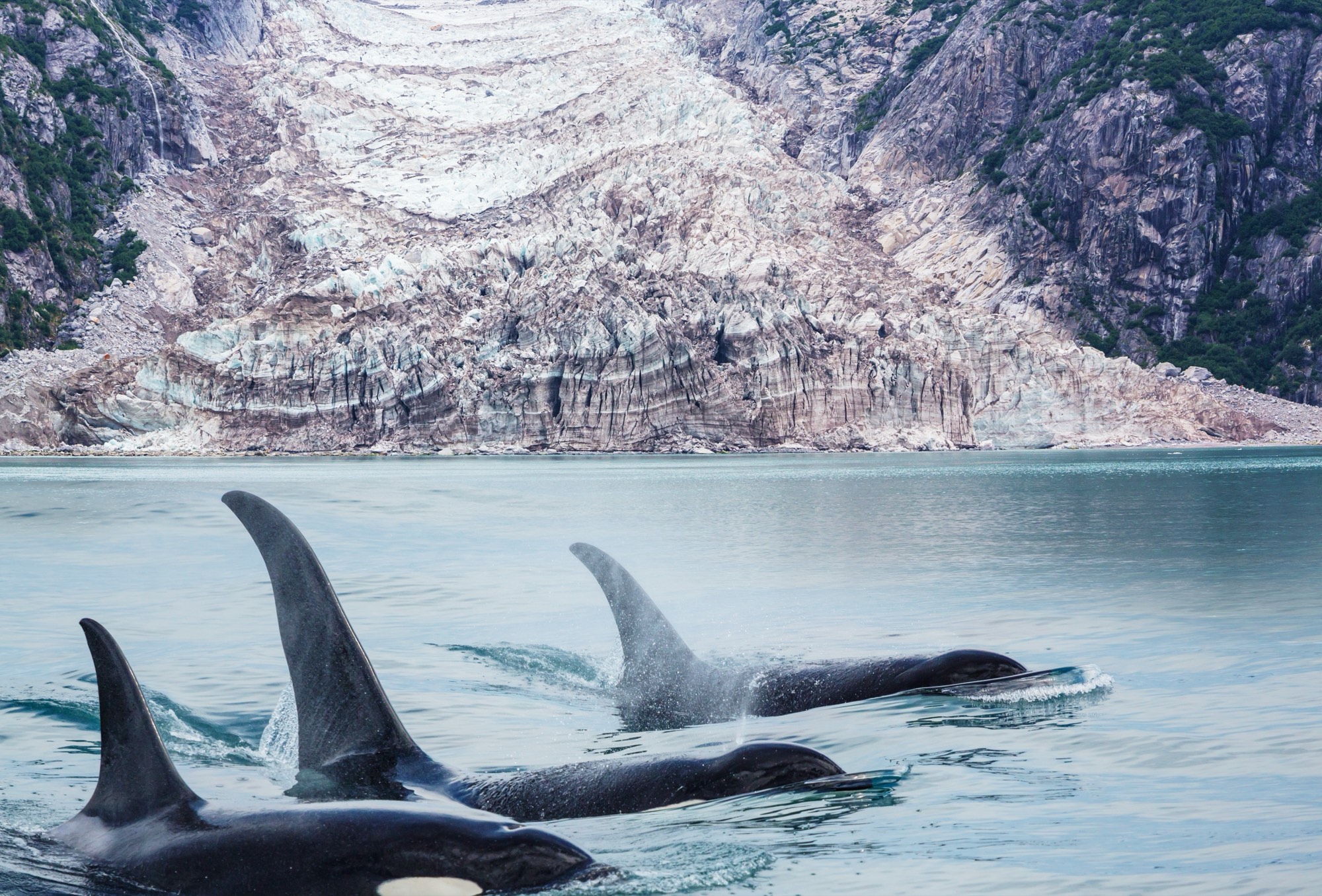
We like to think culture is what makes us human. But somewhere in the ocean, a young orca is being taught to hunt, a humpback is learning a new song, and a dolphin is inventing a tool. What if culture was never ours alone?
Introduction
Part of what makes mammals so fascinating is their complex social lives. The richness of their social behavior has been shaped by both ecological and genetic factors, largely over a very long timeframe. However, when the environment changes rapidly and unpredictably within a relatively short timeframe over generations, the genetic adaptations may be too slow. In this case, learning may be the better solution. Individuals can try to regulate their own behavior through trial and error or learn from other members of the species. Culture can be defined as information or behavior shared in a population and learned from other members of the species.
Culture in animals is a controversial topic, but culture is thought by many to be present in great apes, some birds and cetaceans.
Culture can be transmitted through what is called vertical, oblique and horizontal transmission. Vertical transmission is from parents to offspring, oblique transmission is from other and older members of the pod (like teachers in schools), and horizontal transmission is from peer to peer. Killer whales, for example, show signs of all these forms of culture transmission. But how does the learning actually take place? We will examine this in the next section.
Learning
Imitation is the learning of a new behavior from seeing it done by someone else. Imitation has been the primary focus of experimental psychologists studying animal learning. Imitation is considered one of the most important drivers of cultural evolution, which has led to things like languages. It seems to play a large role in dolphin learning (at least in captive dolphins). In tanks, dolphins have been shown to imitate both each other but also humans. This ability is used in training as one dolphin is taught a new behavior and then the other dolphins imitate the same behavior. During a study involving killer whales, one of the whales had a 2-month-old calf. The calf was observed spontaneously matching two of the behaviors the mother had learned. The calf was not trained for this and received no rewards. It simply did it by itself. This copying is likely very valuable in nature when, for example, learning to hunt.
Vocal learning is learning to produce a sound simply by hearing it from another individual. Dolphins are very good at picking up new sounds and reproducing them, even human sounds. Also, killer whales have this ability. A young killer whale, Luna, was separated from his pod for unknown reasons. Luna was then recorded making very close imitations of sea lion barks. Isolated from his pod of killer whales, he somewhat associated with sea lions, from which he learned their barks.
Another example is from a captive beluga named NOC. NOC began spontaneously making unusual sounds. The vocalizations sounded like two humans talking in the distance, out of range of actually understanding the conversation. The conversations, after being heard several times, were identified as the whale talking. NOC frequently heard human speech from the surface, but also when divers used surface-to-diver communication equipment. One day a diver surfaced outside NOC’s enclosure asking, “Who told me to get out?” The answer was that NOC did! NOC had repeatedly said “out”, which the diver had heard. Future recordings showed that NOC had adjusted his amplitude rhythm, rhythm of vocal bursts, frequencies and spectral characteristics to closely match that of people.
Examples of culture
In this section we will take a look at four examples that might be called culture. The examples involve dolphins, orcas, right whales and humpback whales, but it could really include many more.
Humpback whale song
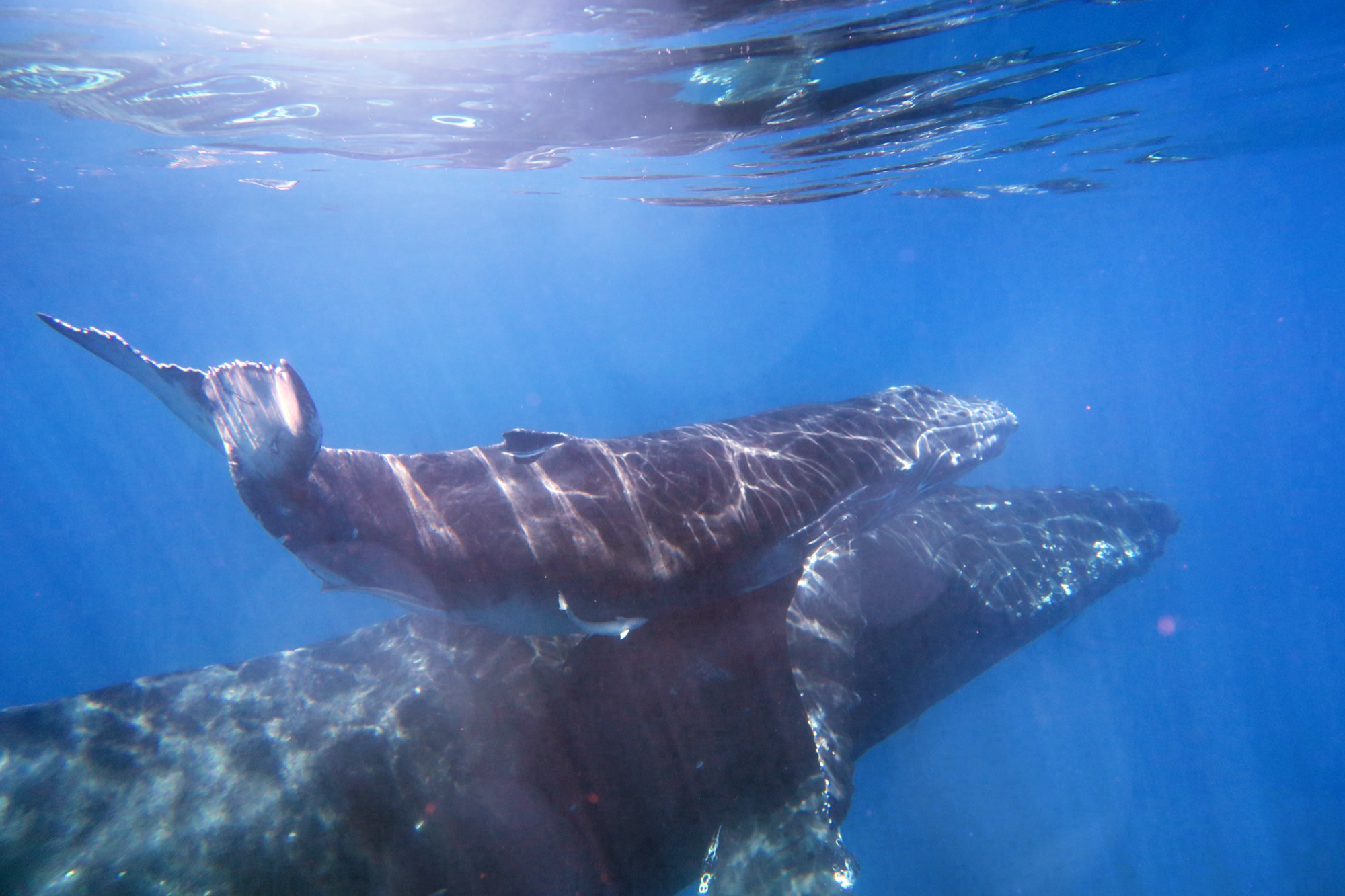
Humpback whale songs are considered one of the clearest examples of cetacean culture. Humpback whales, like many other baleen whales, migrate yearly, and on this migration and on the breeding grounds, they sing. The songs are very complex and structured. The song is shared among all males in a population. The song is changed over time, but all males follow these updates so they keep singing the same song. The songs can change over years, but can also shift to entirely new songs over shorter durations. These revolutionary changes likely occur as a result of a population overhearing a neighbouring population’s song. The song changes, both short-term and long-term, are facilitated by the whales hearing each other. It is therefore social learning, and it takes place on a population level, so according to the definition of culture used earlier in this lesson, this can confidently be called culture.
Right whale migration
Southern right whales seem to learn from their mothers the preferred migratory destinations. The calves remain with their mothers for about a year. This gives them the time to learn migration routes and foraging areas. Female right whales show a strong preference for specific winter calving grounds and foraging locations. Studies have shown that more closely related whales were more likely to feed in the same location. An indication of the learning of foraging locations through the process of vertical transmission.
Dolphins using sponges
Culture is both a reason for uniformity and differences between groups. They both often arise from social learning. In Shark Bay, Australia, a population of over 500 bottlenose dolphins has been studied for many years. About 50 of these dolphins have created their own foraging method. They use sponges as tools for foraging. Using tools is in itself incredible and very rare, but the learning of it is the interesting part for this lesson. Social learning by observation is the likely method of learning this tool use. Interestingly, it is only a small subset of the population that uses this method, and they are almost all female, taught from mother to daughter. This group of tool users also displays stronger associations with each other than with other non-tool users. They might have created their own subculture.
Orca dialects
It seems almost certain that you can call the pulsed-call dialects of orcas culture. It has been shown how calls vary between pods, clans and communities. Over many years, the calls have been tracked and it has been found that small changes to specific calls occur over time. These changes occur in parallel between pods that often associate. This strongly suggests the orcas are learning from each other rather than the calls changing randomly. If the changes were random or genetic, the calls would not change in sync. Synchronized change in the calls between socially connected groups is a strong indication of cultural transmission.
Keiko
Another way to study the importance of culture is by examining the effects of limited culture acquisition. If individuals are somehow raised without culture, you can see whether they develop the same behaviors or not. A sad example of this is the orca named Keiko (ironically meaning “lucky” or “blessed child” in Japanese). Keiko is known for starring in the movie “Free Willy” from 1993. The movie is about a child rescuing an orca from captivity, but sadly, the real “Willy,” Keiko, was simply made to continue his life in a captive facility in Mexico after the shooting had wrapped. He was kept mostly alone, with only a couple of bottlenose dolphins for company. Keiko is an orca from the waters around Iceland and was captured at age 2. He was kept in aquariums in Iceland, Canada and lastly Mexico. In Iceland and Canada, there were other orcas with him. After the movie, a campaign to free Keiko was a success and secured several million dollars. Keiko was eventually flown back to Iceland to a sea pen to begin a training program, which should lead to his release. Keiko had received all care, contact and food from humans his entire adult life, so the transition to the wild would be hard. The first step was to escort Keiko on trips from his home pen to areas with wild orcas. The hope was that he would connect with the wild orcas and gradually become independent from humans. In the beginning, he was awkward and kept his distance and did not participate in foraging activities with the wild whales. Stomach samples showed that he was not able to feed for himself yet. After a few weeks, it seemed to go better with Keiko getting close to the wild whales. Until one day a wild whale initiated a typical interaction, which included a splash from the tail. This behavior startled Keiko and he rushed back to his familiar humans. In the coming days, Keiko swam away from Iceland and, over the next three weeks, made it to Norway. His first act in Norway was to follow a boat into a fjord, Skålvikfjorden. He now called this home, and a new sea pen was built for him. He was again fed by humans and lived the rest of his life here and without contact with wild orcas.
Growing up without other orcas to learn from, he could never reintegrate into the wild. This shows the importance of social learning. He never learned to feed for himself or communicate with wild orcas. Behaviors that are completely natural and paramount to survival in the wild.
The learning we have explored so far has been based on watching or listening to a “model” individual. In these situations, the model has simply been going about their business without having to do anything special. In human culture, however, there is also a teaching side. We have teachers who actively try to teach someone else a new skill. Teaching is seen as more complex than learning through a process like imitation. This is largely because teaching requires some theory of mind. Theory of mind is the understanding of other individuals’ beliefs, desires, intentions, emotions and thoughts, and that they might be different from your own. When teaching, you first have to realize that the other individual does not know the same as you do. A teacher can then follow the progress and adjust according to the knowledge level of the student. This requires a lot of brain capacity. Since we cannot ask animals whether they teach, it is hard to conclude anything. In humans, teaching often involves theory of mind, but since we cannot test this in animals, Caro and Hauser proposed a behavior-focused definition. Tim Caro and Marc Hauser proposed a framework of what would qualify as teaching: 1. The teacher has to do something that he/she would not do if the student was not there 2. The teacher does not receive any immediate benefit 3. The student should learn something new or acquire it faster or more efficiently. With this definition, teaching is seen in the animal kingdom, but it is rare. One example is the intentional beaching of orcas around the Crozet Islands. Two calves, named A4 and A5, were observed for three years. The technique of intentional stranding is very dangerous and takes a long time to learn.
The orcas strand on beaches with no seals on them in groups with calves. This appears to be the time of learning for the calves. The mothers were described as pushing their calves up the beach and back down again. When seals were present, the calves were pushed toward young seals. This checks the first two requirements. This behavior could not have been possible without calves around, and the adults gained nothing from it. But did the calves learn anything?
A4 and A5 were both regularly seen taking part in these beaching sessions. Only A5 would become proficient enough to catch prey this way, however. The difference might have been the mothers/teachers. A5 always had its mother around when stranding, whereas A4 only had its mother around for 2 of 35 stranding attempts. A4’s mother did not hunt by beaching herself and rarely joined in for the beaching sessions. A5’s mother followed the progress closely and participated in play strandings. She stranded herself as well to help A5 get back in the water and assisted in the first successful hunt of A5. It seems likely that actively teaching their calves this technique produces better results and increased fitness. This would make it worth it for the orcas to teach, and from the example of A5 and A4, it seems that they do learn something, and it would therefore qualify as teaching according to the earlier definition.